













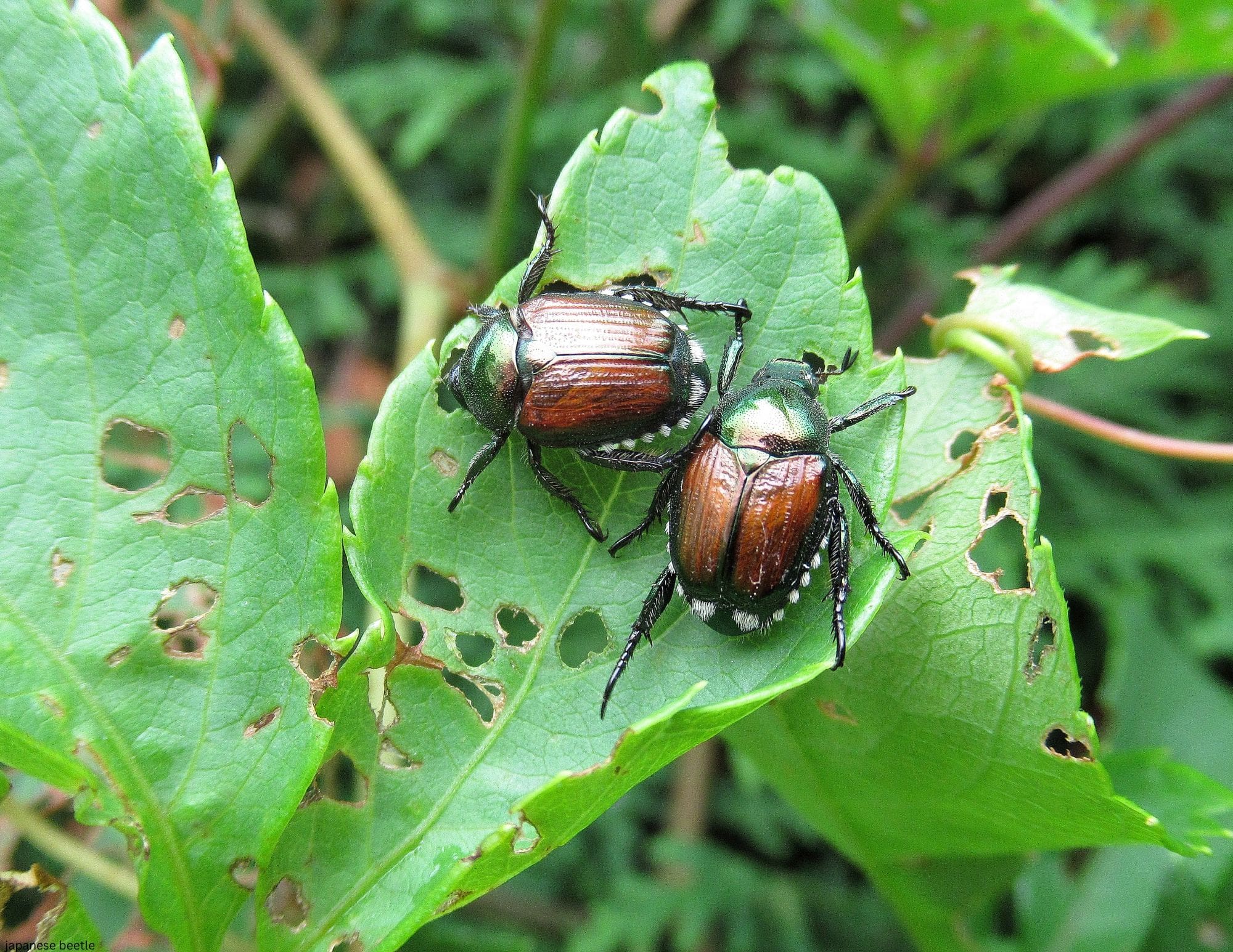
If you’ve noticed shiny green beetles chewing holes in your roses, grapes, linden trees, or other landscape plants, you’re not alone. Japanese beetles are one of the most destructive garden pests in Minnesota during the middle of summer. The good news is that there are effective ways to reduce damage without making the problem worse.
What Are Japanese Beetles?
Adult Japanese beetles are about half an inch long with metallic green bodies, bronze-colored wing covers, and small white tufts of hair along each side of their abdomen.
They feed on more than 300 different plant species, but some of their favorites include:
- Roses
- Grapes
- Linden trees
- Apple trees
- Birch trees
- Hibiscus
- Virginia creeper
- Beans
- Raspberries
They typically feed between late June and early August in Minnesota, with activity peaking in July.
How Do They Damage Plants?
Japanese beetles feed on the soft tissue between leaf veins, leaving behind a skeleton-like network of veins. They also feed on flowers and fruit, often causing significant cosmetic damage in a short period of time. Large groups of beetles are especially destructive because the feeding damage releases plant odors that attract even more beetles. The sooner you begin managing them, the better.
The Best Ways to Control Japanese Beetles
No single method will eliminate every beetle, but combining several approaches can greatly reduce plant damage.
Hand Pick Beetles
One of the most effective methods is also the simplest. Early in the morning, when beetles are less active, knock them into a bucket of soapy water. This quickly kills them and helps prevent additional beetles from gathering. Removing beetles every day or two can make a noticeable difference.
Protect Valuable Plants
If beetles are causing severe damage, insecticides labeled for Japanese beetles can help protect ornamental plants. Always read and follow the label instructions, especially when treating flowering plants that attract pollinators. At Pahl’s Market, we carry a variety of products to help control Japanese beetles. Our staff can help you choose the right option for your landscape.
Skip the Beetle Traps
Although Japanese beetle traps catch thousands of beetles, research has shown they often attract even more beetles into your yard than they remove. Unless traps are placed well away from the plants you’re trying to protect, they may actually increase feeding damage.
Look for the White Eggs Before You Kill Every Beetle
Here’s something many gardeners don’t know. If you see a Japanese beetle with one or more small white spots on its back, leave it alone. Those white spots are the eggs of the winsome fly, a beneficial insect that naturally helps control Japanese beetle populations. When the egg hatches, the tiny larva enters the beetle and eventually kills it. Adult winsome flies continue searching for additional beetles, helping reduce future populations naturally. By leaving beetles with these white eggs in your garden, you’re allowing nature to do some of the work for you. Not every beetle will have these eggs, but if you notice them, they are a welcome sign that beneficial insects are already helping.
What About the Grubs?
Japanese beetles begin life as white grubs living in the soil, where they feed on grass roots. While grub control products can reduce future beetle populations in some situations, they are not always necessary. Many lawns can tolerate small numbers of grubs without damage, and adult beetles are capable of flying in from neighboring properties. For most homeowners, focusing on protecting valuable landscape plants during beetle season provides the greatest benefit.
Stop by Pahl’s Market
If Japanese beetles are taking over your garden, we’re here to help. Whether you’re looking for insect control products, plant care advice, or recommendations on protecting your favorite trees, shrubs, roses, and other landscape plants, our knowledgeable staff can help you choose the best solution. With a combination of early action, regular monitoring, and a little help from beneficial insects like the winsome fly, you can keep Japanese beetles from taking over your landscape this summer.
References
- University of Minnesota Extension. Japanese Beetles in Home Gardens. Information on identification, feeding damage, management strategies, and why beetle traps are generally not recommended.
- University of Minnesota Extension. Winsome Fly as a Biological Control of Japanese Beetles. Information on Istocheta aldrichi, the white eggs found on adult beetles, and its role as a beneficial parasitoid.
- University of Kentucky Entomology. Japanese Beetle Management in Home Landscapes. Guidance on integrated pest management, hand removal, insecticides, and biological control.
- University of Illinois Extension. Japanese Beetles. Identification, life cycle, feeding behavior, and management recommendations.


0 Comments